
Rest as Ritual
Simple Shifts for Better Sleep

Recently, I led a workshop on sleep and rest, and what struck me most was how similar the struggles were among the women in the room.
Nearly everyone shared some version of the same story: a restless mind that won’t switch off, the constant overstimulation from screens, a lack of sunlight, and no real bedtime ritual to signal to the body that it’s safe to let go. It reminded me how universal these challenges are — and how much relief can come from the simplest shifts when we learn to work with, rather than against, our natural rhythms.

Sleep isn’t just the absence of doing. It’s the foundation of hormone balance, mental clarity, and the body’s natural repair cycle. Yet so many of us push against our body’s rhythms — scrolling late into the night, skipping meals, or riding stress like it’s normal.
In Ayurveda, sleep is seen as one of the three pillars of health (along with food and energy management). And modern research on circadian rhythms confirms what this ancient wisdom knew: when we align our daily habits with the body’s clock, everything works more smoothly — hormones, digestion, mood, and yes, weight balance too.
Here are a few simple tools and insights you can bring into your evenings to make rest a ritual instead of an afterthought.
Understanding Your Circadian Rhythms
Most of us think of sleep as something that just happens when we get tired, but in reality, it’s guided by a powerful internal clock known as the circadian rhythm. This 24-hour cycle is hardwired into every cell of the body and regulates not only when we feel awake or sleepy, but also when hormones are released, how well we digest food, and even when our brain is most alert or creative.
The main players in the sleep-wake cycle are cortisol, which rises in the morning to wake us up, and melatonin, which rises in the evening to guide us into rest. When this rhythm gets disrupted — from late-night screens, irregular meal times, or staying up past the body’s natural wind-down window — the whole system falls out of sync.
Understanding how your circadian rhythm works is the first step to aligning daily habits with your biology, so sleep becomes more restorative and energy feels steadier throughout the day.
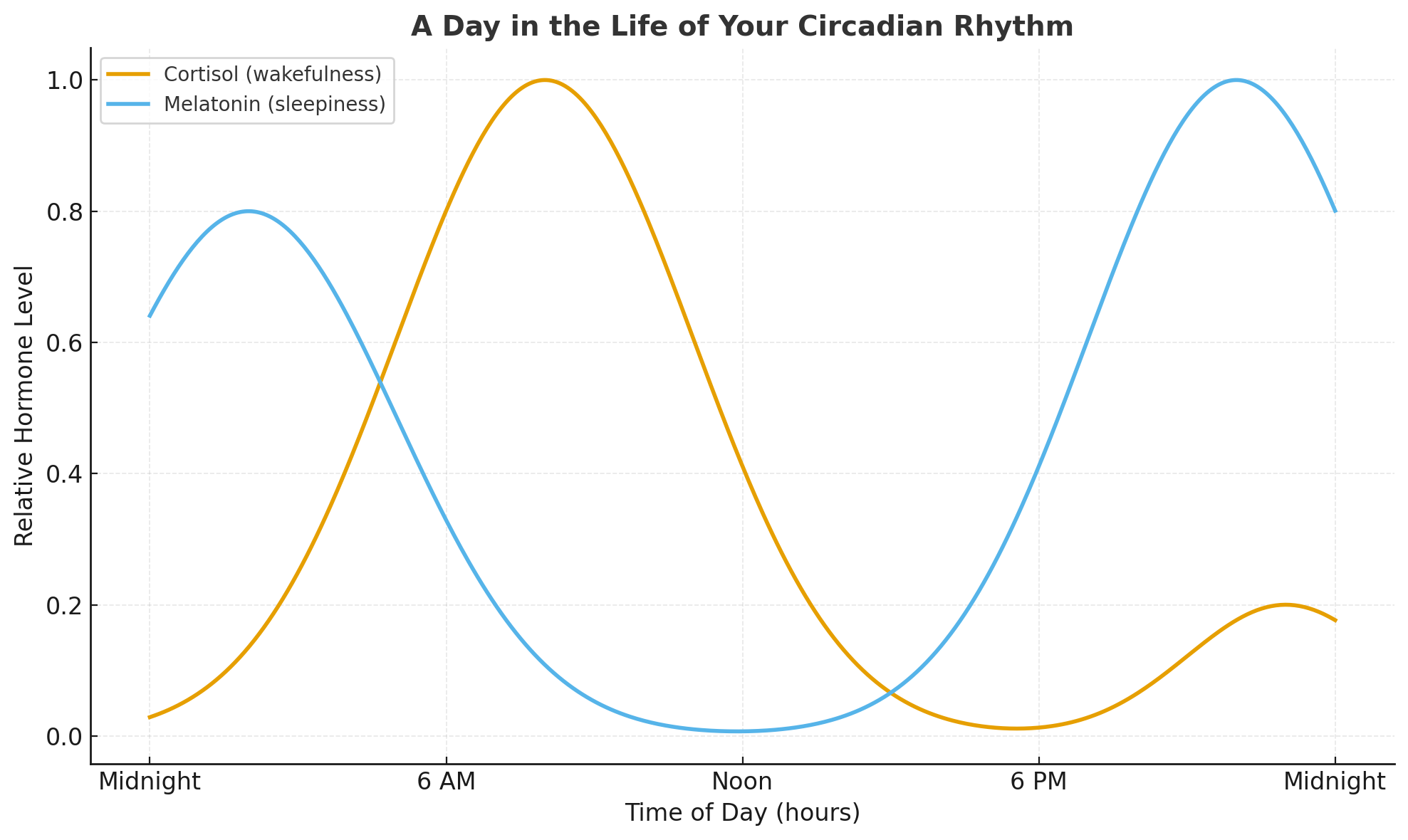
But this is only one way of understanding how the body cycles each day.
The Ayurveda-based phases of the day are important because our body, mind, and energy naturally follow cyclical rhythms that align with the doshas—Vata, Pitta, and Kapha. Each phase supports specific activities that harmonize with these energies, making daily routines more effective and nourishing.
Aligning with these rhythms can improve digestion, sleep, emotional balance, and overall vitality (ojas), helping you live in sync with both your inner nature and the natural cycles of the world around you.
Morning (6–10am, Kapha time): energy is heavier and more stable — great for grounding rituals, exercise, and breakfast.
Midday (10am–2pm, Pitta time): digestion and focus are strongest — your more challenging projects and biggest meal belongs here.
Afternoon (2–6pm, Vata time): lighter, more creative energy.
Evening (6–10pm, Kapha time): the body begins winding down — the perfect window for calming rituals.
Night (10pm–2am, Pitta time): the body shifts into repair and detox. If you’re awake, you’ll often feel a “second wind.”
Early Morning (2–6am, Vata time): ideal for meditation, gentle yoga, reflection, and cleansing.
When we eat, sleep, move, and work with our natural rhythms—circadian and Ayurvedic—sleep becomes deeper and overall energy steadier.
But, before you jump right into a routine overhaul, let’s go over a few practical tools that can support your sleep.
Blood Sugar + Cortisol Connection
Ever notice how a late-night dessert or glass of wine leaves you restless? That’s the cortisol-blood sugar loop in action.
Balanced blood sugar is essential for restful sleep because spikes and crashes can disrupt your body’s natural rhythms, trigger night-time awakenings, and make it harder to fall asleep. When blood sugar is steady, your body can release sleep-supporting hormones like melatonin and maintain a calm nervous system, helping you drift into deep, restorative rest.
Here’s what’s happening:
Sugary foods throughout the day, excessive fasting, late-night eating, or inconsistent meal times cause blood sugar spikes.
The body releases insulin to uptake glucose and bring levels back down.
The body perceives this as a crash, therefore releasing cortisol.
Elevated cortisol at night = difficulty falling asleep, sleep interruptions, early morning waking, and hormone disruption.
Practical tools:
Eat meals at consistent times— breakfast within 1-hour of waking (preferably after sunrise), midday lunch (your biggest meal), dinner before sunset (or at least 3 hours before bedtime).
Include a moderate amount of protein and healthy fat at dinner to stabilize blood sugar, but not so much that you are digesting well into bedtime.
If you need a snack before bed, keep it simple and grounding — think warm milk with cinnamon or a spoonful of almond butter.
Before late-night snacking, pause to sit with your cravings. What do you actually need? Comfort, hydration, or energy (you might just need to get more rest!)
Obviously, there are lifestyle nuances that require personalization of these tools. Feel free to comment on this post with your questions!
Magnesium: The Sleep Mineral
Magnesium is a crucial mineral for sleep because it helps calm the nervous system, regulate the body’s stress response, supports a healthy estrogen + progesterone balance, and promotes muscle relaxation, all of which are essential for falling and staying asleep.
Despite its importance, many people are magnesium deficient due to modern dietary patterns, including highly processed foods, soil-depleted produce, and low intake of magnesium-rich foods like leafy greens, nuts, and seeds. Stress, caffeine, alcohol, and certain medications can further deplete magnesium levels, making it harder for the body to relax and settle into restorative sleep.
Understanding this connection highlights why supporting magnesium intake can be a simple yet powerful step toward deeper, more restorative rest.
Best forms for sleep: magnesium glycinate or magnesium bisglycinate; can be found in capsule, powder or oil form.
Food sources: spinach, Swiss chard, kale, beet greens, avocados, bananas, almonds, cashews, pumpkin seeds, sunflower seeds, sesame seeds, black beans, chickpeas, lentils, edamame, quinoa, brown rice, oats, buckwheat, salmon, mackerel, halibut, dark chocolate (70% or higher).
Rituals: Epsom salt or magnesium flake baths, magnesium-rich teas, magnesium oil behind the ears or on bottoms of feet, or a nightly supplement if needed.

Your Unique Evening Ritual
Creating an evening ritual is about much more than relaxation — it’s a way of teaching your body and mind to transition from the stimulation of the day into the restoration of the night. Without this intentional wind-down, most of us carry the momentum of stress, screens, and mental chatter straight into bed, leaving the nervous system too activated to slip into deep, healing sleep.
A ritual doesn’t have to be elaborate — even dimming the lights, sipping a warm tea, and turning off devices can act as powerful signals that it’s time to shift gears. Over time, these consistent cues regulate circadian rhythms, lower evening cortisol, and support the natural rise of melatonin, your sleep hormone.
In Ayurveda, your evening wind down helps to align with the Kapha time of evening — grounding, slow, and steady energy that helps the body feel safe to rest. When we honor this window with ritual, we not only improve the quality of our sleep but also give our hormones, digestion, and nervous system the balance they need to carry us calmly into the next day.
Note: You do NOT need a 2-hour wind-down routine. Start small and make it consistent. Pick 2-3 rituals to try tonight.
Simple (5–10 minutes):
Dim lights an hour before bed.
Put your phone away 2 hours before bed.
Sip chamomile or tulsi tea.
Gentle neck + shoulder stretches.
Moderate (10–20 minutes):
Self-massage with warm sesame or coconut oil.
Journaling or gratitude reflection.
Reading (paper, not screens).
Luxurious (20–40 minutes):
Herbal bath with Epsom salts and aromatherapy (lavender, sandalwood).
Restorative yoga or guided Yoga Nidra.
A skincare routine with facial massage.
Full evening ritual: massage, candlelight, journaling, tea.
Connecting through conversation with your partner.
👉 Pick 2–3 rituals that feel nourishing. Consistency matters more than complexity.
A Short Yoga Nidra Practice
Yoga Nidra is a guided meditation sometimes called “yogic sleep.” It leads the body into deep rest while the mind remains gently aware — perfect for calming the nervous system before bed.
Try this simple yoga nidra practice tonight:
Lie down comfortably, cover yourself with a blanket.
Close your eyes, take a few slow breaths.
Mentally scan your body from toes to head, softening each part.
Bring awareness to your breath, letting each exhale melt tension away.
Repeat a simple phrase (your sankalpa), like “I am safe and deeply rested.”
Stay here for 5–10 minutes before drifting into sleep.
You can also find yoga nidra recordings on YouTube and Spotify.
Note: I will be creating an audio library of meditations and visualizations for paid subscribers — COMING SOON!
Reflection Questions
What habits or routines in the evening currently help me feel calm and ready for sleep, and which ones might be keeping me awake?
How do I notice my body and mind signaling that it’s time to rest?
If I could design the perfect sleep ritual for myself, what simple steps would it include?
What small change tonight could bring me closer to more restful, restorative sleep?
Take a few moments to sit with your answers without judgment. Let them guide you in creating a sleep ritual that truly supports your body, mind, and natural rhythm, one gentle step at a time.
Final Reminders
Rest doesn’t have to be something you collapse into at the end of a long day. It can be a ritual — a way of honoring your body, balancing your hormones, and tending to your inner garden at just the right time.
When you begin to align with your natural rhythms, sleep stops being a struggle and becomes the medicine it was always meant to be.